
Travel: . Grammar: Quantifiers- few, a few, a lot of, lots of Pronunciation: ei sound
LISTENING PRACTICE
Use the audio player at the bottom of the screen to listen. Use the player’s control to slow it down if necessary.
TEXT
The Inca built a strong empire that stretched about 4,000 kilometers along the Pacific coast of South America—from today’s Ecuador down to Chile. This distance is about the same as the width of Australia.
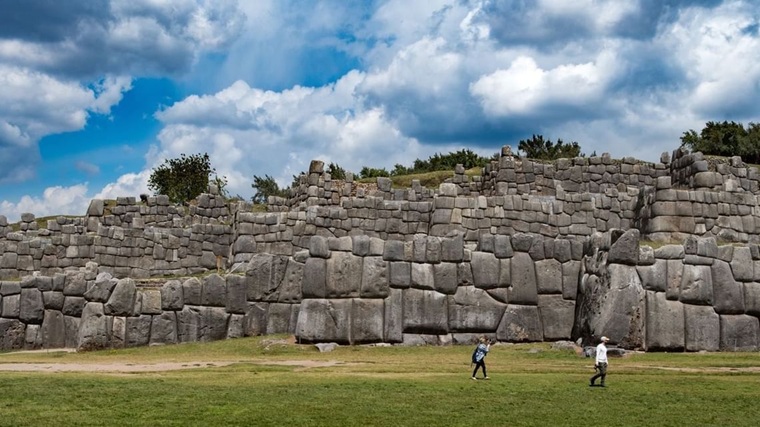
The Inca were very skilled at building with stone. They knew how to make buildings that could survive the many earthquakes in the region. They did not use cement mortar to hold the stones together. Instead, they cut the stones very carefully so they fit tightly. During an earthquake, the stones could move, and when the shaking stopped, the stones fell back into place. They cut, moved, and shaped heavy stones without using wheels or steel tools.
Many of their buildings have lasted for centuries. Today, tourists can visit a stone fortress that still stands in Cusco, the old capital of the Inca Empire.
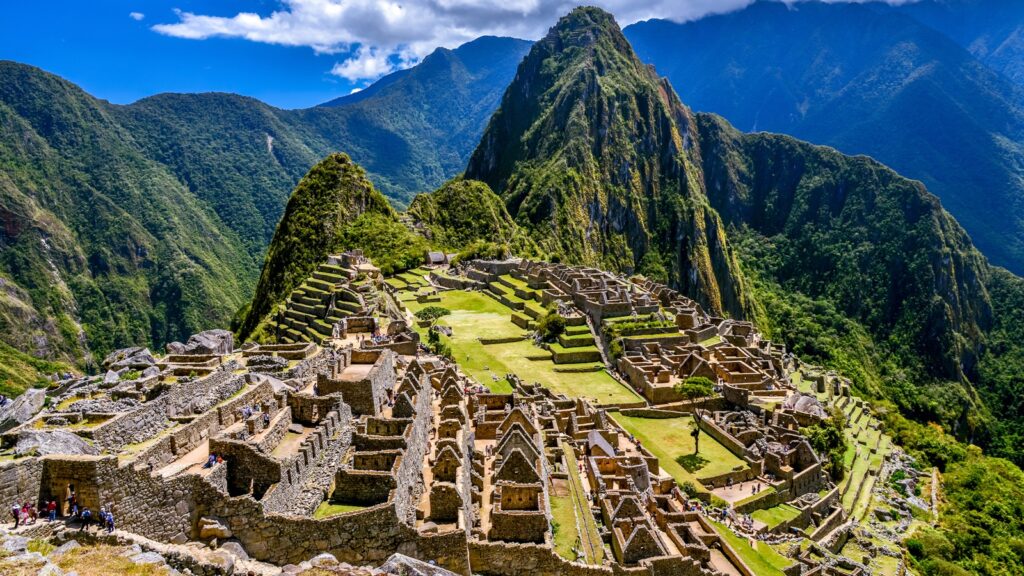
Machu Picchu, about 45 kilometers from Cusco, is a well-preserved example of the Inca’s building skills. At Machu Picchu, the Inca built palaces, temples, terraces, and roads—all from stone. It is one of the most interesting places in the world to visit.
We still do not know exactly why Machu Picchu was built. Some people think it was used for ceremonies, as a military fortress, or as a resting place for the wealthy. Many buildings are lined up with events in the sky, like the movement of the sun and stars.
In the early 1500s, about 100 years after it was built, Machu Picchu was abandoned. The Inca did not have a writing system, so they left no records to explain why it was built or why it was left behind.
Local people always knew about Machu Picchu, but for hundreds of years, it was unknown to the outside world. The Spanish armies that took over Inca lands in the 1500s never found it.
In 1911, a local farmer named Melchor Arteaga showed the site to a professor from Yale University, Hiram Bingham. Bingham and other explorers spent many years studying the city.
Even though it is still a mystery, Machu Picchu is one of the most important ancient places in the world. It shows the smart ideas of the Inca people and the strength of their empire. In 1983, UNESCO named it a World Heritage Site.
Tourists can visit Machu Picchu by taking a train from Cusco or by hiking the old Inca Trail, a very interesting trip through the mountains that lasts about four days.
NEW WORDS
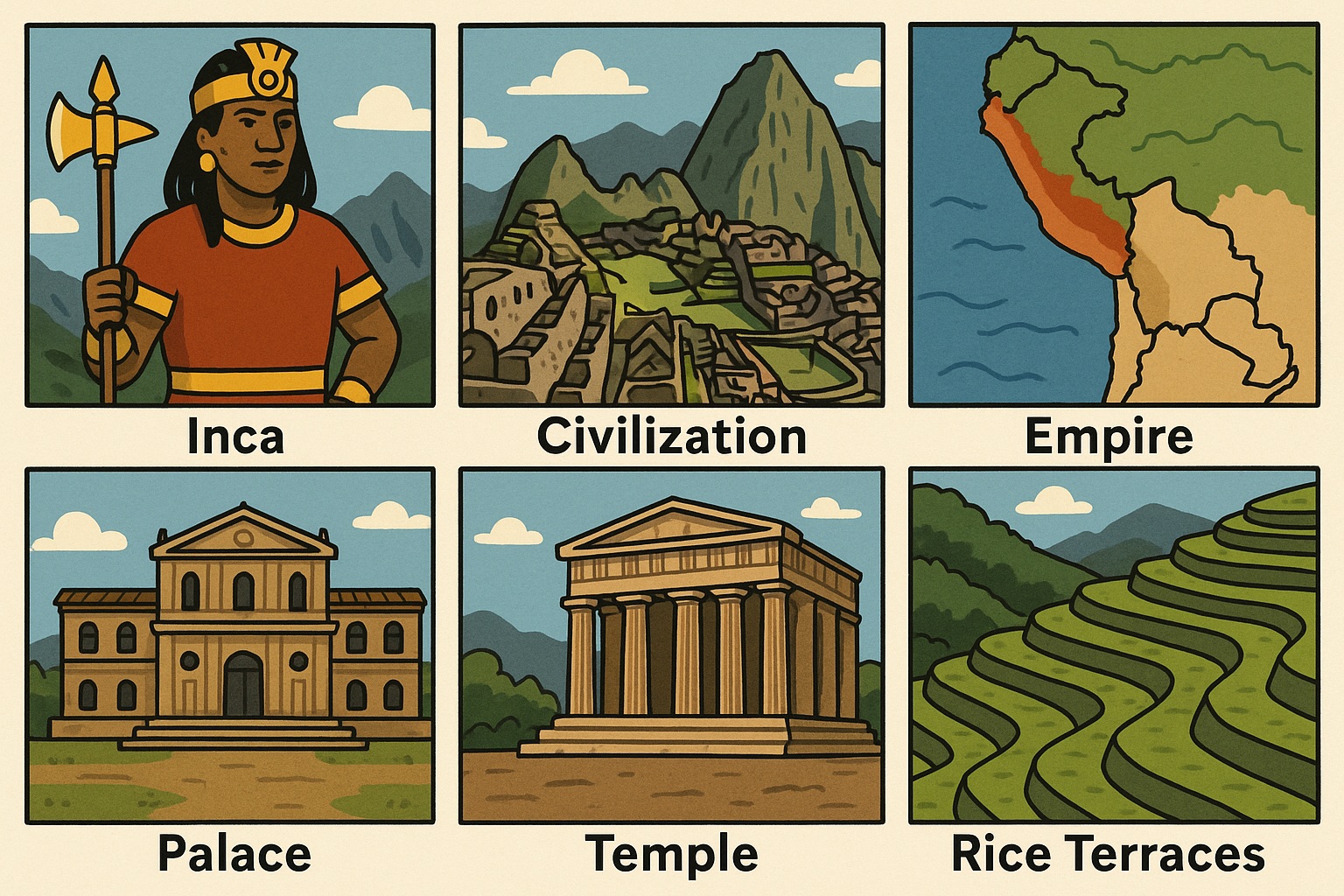
Inca – People who lived long ago in South America and built amazing cities.
Civilization – A group of people living together with rules, buildings, and ways of life.
Empire – A big group of lands and people ruled by one leader.
Palace – A big house where a king or queen lives.
Temple – A special building where people pray or honor gods.
Terrace – Flat steps on a hill used to grow rice.
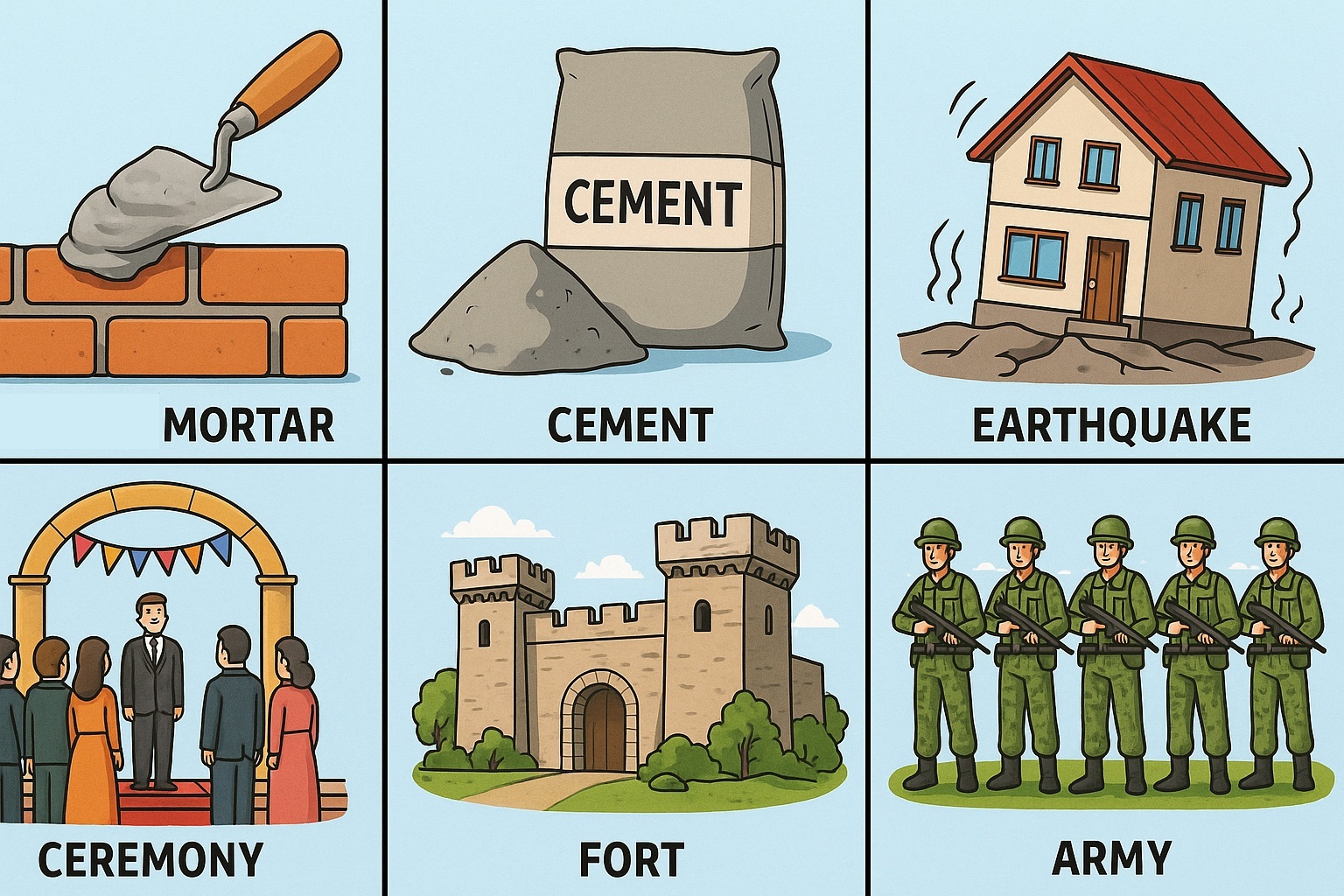
Mortar – A sticky mix that holds bricks or stones together.
Cement – A powder that turns hard and is used to build things.
Earthquake – A sudden shaking of the ground.
Ceremony – A special event like a celebration or tradition.
Fort/ Fortress – A strong building used to protect people.
Army – A group of people who protect a country or fight in wars.
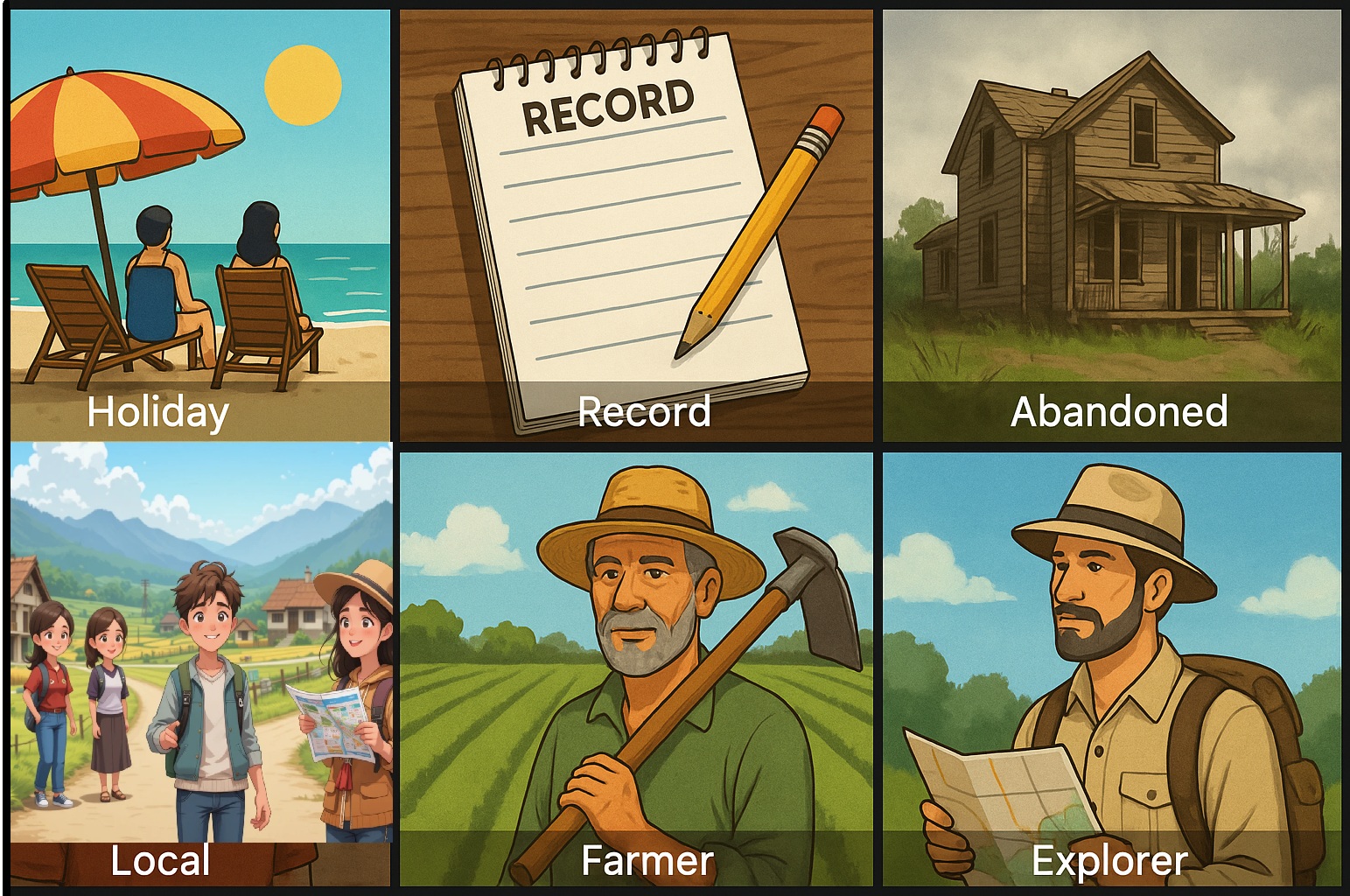
Resting place (Holiday place)– A place where people go to rest.
Record – Something written down to remember or explain something.
Abandoned – Left behind and not used anymore.
Local – Something or someone from nearby.
Farmer – A person who grows food or raises animals.
Explorer – Someone who travels to learn about new places.
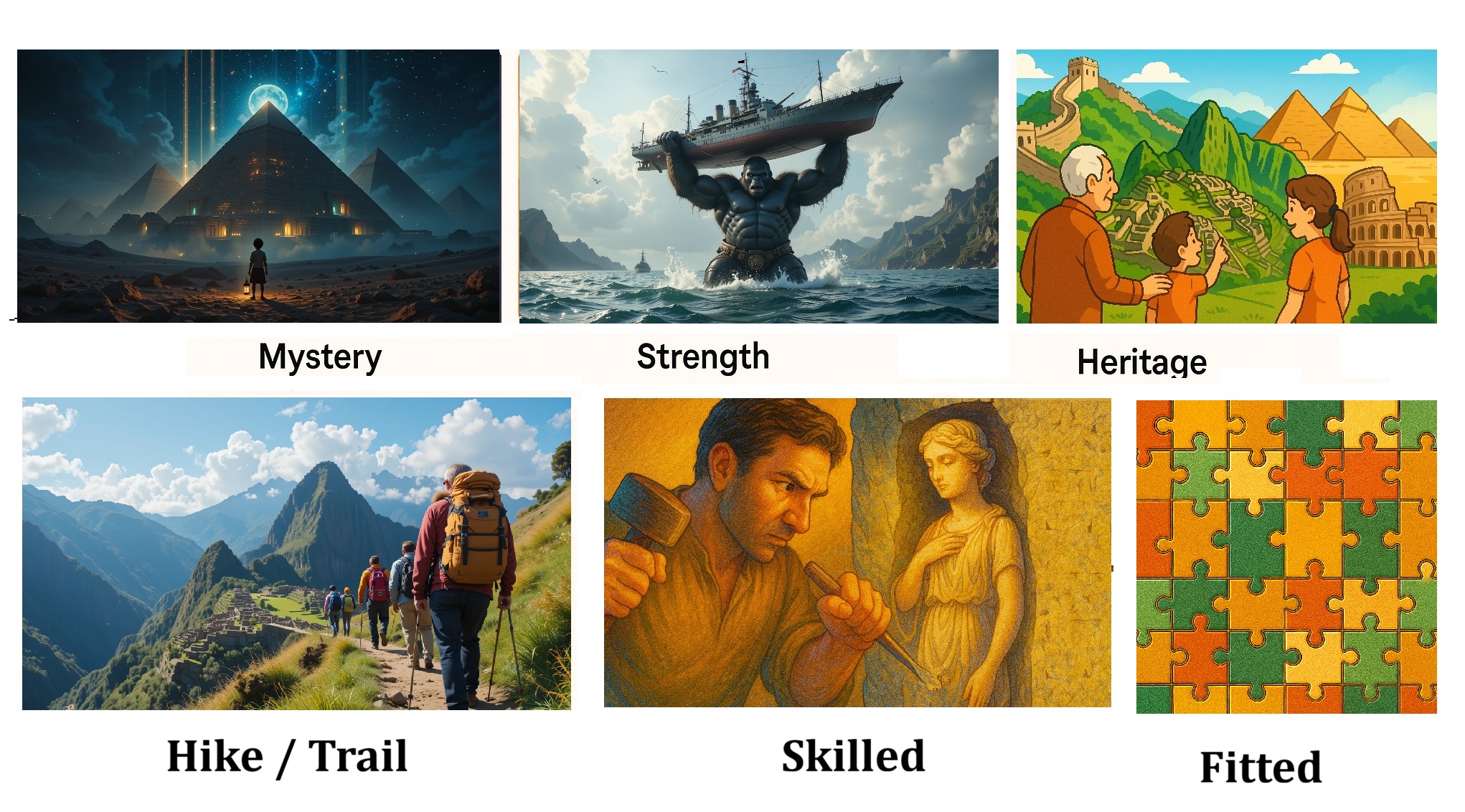
Mystery – Something we don’t understand yet or is hard to explain.
Strength – Being strong in body or mind.
Heritage – Things from the past that people still care about today.
Site – A place where something important happened or is built.
Hike – A long walk, usually in nature like a forest, mountain, or park.
Trail – A small road, usually in nature like a forest, mountain, or park.
Fit – Two pieces that fit together go into each other perfectly, without space. Clothes that fit are just the right size for your body.
TEST YOUR VOCABLARY – Say the word that goes with the image
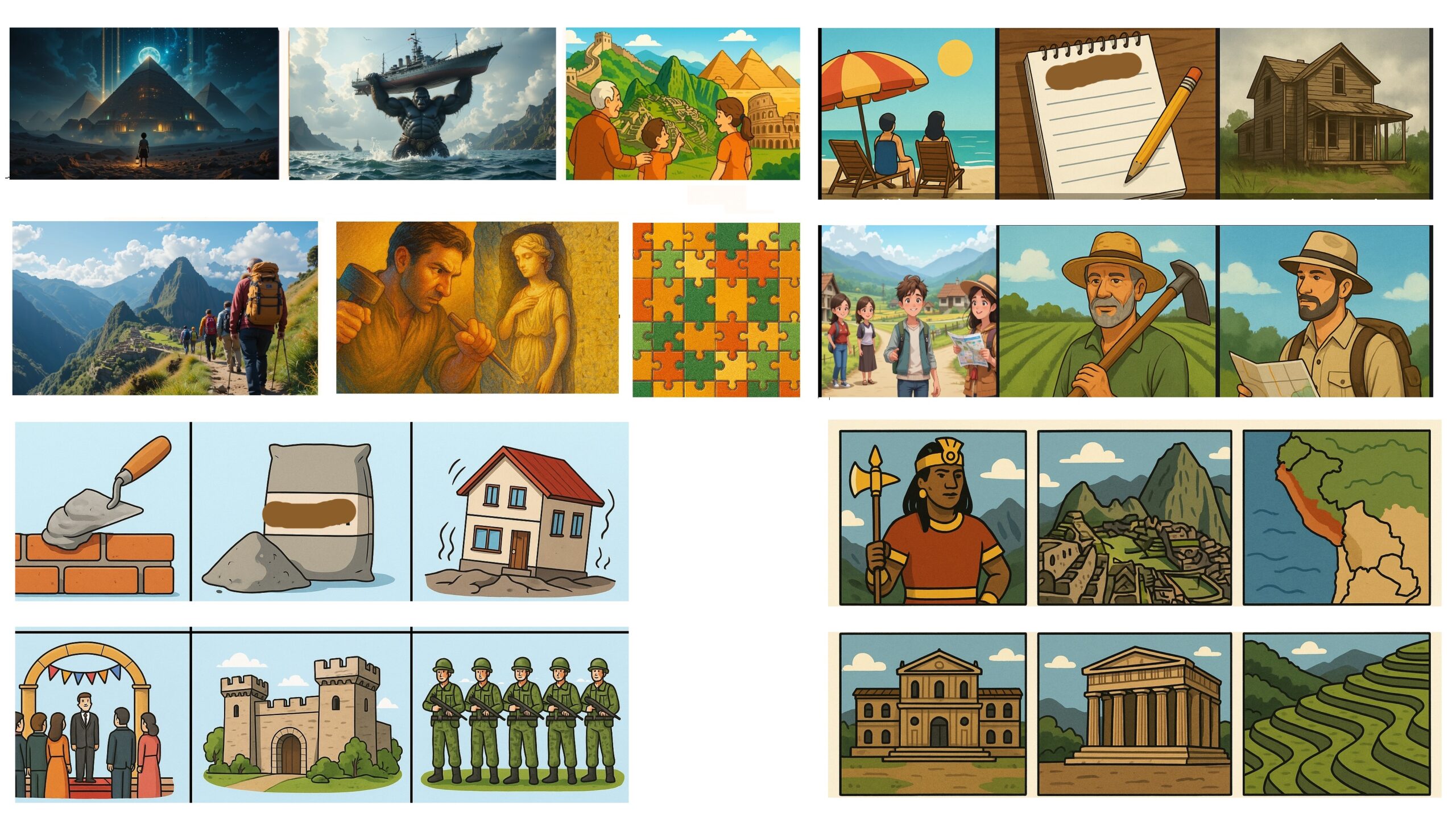
17
TEST YOUR VOCABLARY – Fill in the blanks
FILL IN THE BLANKS
The Inca built a strong empire that stretched about 4,000 kilometers along the Pacific coast of South America—from today’s Ecuador down to Chile. This distance is about the same as the width of Australia.
The Inca were very skilled at building with stone. They knew how to make buildings that could survive the many earthquakes in the region. They did not use cement mortar to hold the stones together. Instead, they cut the stones very carefully so they fit tightly. During an earthquake, the stones could move, and when the shaking stopped, the stones fell back into place. They cut, moved, and shaped heavy stones without using wheels or steel tools.
Many of their buildings have lasted for centuries. Today, tourists can visit a stone fortress that still stands in Cusco, the old capital of the Inca Empire.
Machu Picchu, about 45 kilometers from Cusco, is a well-preserved example of the Inca’s building skills. At Machu Picchu, the Inca built palaces, temples, terraces, and roads—all from stone. It is one of the most interesting places in the world to visit.
We still do not know exactly why Machu Picchu was built. Some people think it was used for ceremonies, as a military fortress, or as a resting place for the wealthy. Many buildings are lined up with events in the sky, like the movement of the sun and stars.
In the early 1500s, about 100 years after it was built, Machu Picchu was abandoned. The Inca did not have a writing system, so they left no records to explain why it was built or why it was left behind.
Local people always knew about Machu Picchu, but for hundreds of years, it was unknown to the outside world. The Spanish armies that took over Inca lands in the 1500s never found it.
In 1911, a local farmer named Melchor Arteaga showed the site to a professor from Yale University, Hiram Bingham. Bingham and other explorers spent many years studying the city.
Even though it is still a mystery, Machu Picchu is one of the most important ancient places in the world. It shows the smart ideas of the Inca people and the strength of their empire. In 1983, UNESCO named it a World Heritage Site.
Tourists can visit Machu Picchu by taking a train from Cusco or by hiking the old Inca Trail, a very interesting trip through the mountains that lasts about four days.
WORDS
Palaces, mortar, Heritage, resting, Trail, skilled, abandoned, ceremonies, earthquakes, fortress, hiking, ancient, fit, explorer, preserved, cement, stretched, mystery, local, temples, farmer, terraces, survive
Palaces, mortar, Heritage, resting, Trail, skilled, abandoned, ceremonies, earthquakes, fortress, hiking, ancient, fit, explorer, preserved, cement, stretched, mystery, local, temples, farmer, terraces, survive
TEST YOUR LISTENING SKILLS – ANSWER THE QUESTIONS BELOW
Use desktop mode on mobile devices
What is Machu Picchu?
a) A desert
b) An abandoned city
c) A river
d) A forestIn which country is Machu Picchu located?
a) Brazil
b) Chile
c) Peru
d) EcuadorWhat people built Machu Picchu?
a) Romans
b) Egyptians
c) Incas
d) SpanishHow many kilometers did the Inca civilization stretch?
a) 500
b) 1,000
c) 4,000
d) 5,000Which two modern countries marked the edges of the Inca Empire?
a) Mexico and Argentina
b) Ecuador and Chile
c) Peru and Bolivia
d) Brazil and ColombiaAround which century was Machu Picchu built?
a) 10th century
b) 12th century
c) 15th century
d) 18th centuryWhat materials did the Inca use to build Machu Picchu?
a) Wood and clay
b) Stone
c) Bricks
d) IronDid the Inca use wheels or iron tools to build Machu Picchu?
a) Yes, both
b) Only wheels
c) Only iron tools
d) NoWhat buildings were built in Machu Picchu (name two)?
a) Castles and towers
b) Palaces and temples
c) Houses and shops
d) Theaters and statuesWhat is special about the stones in Machu Picchu?
a) They are very colorful
b) They are made of gold
c) They fit together very tightly
d) They are very smallHow do the stones react during earthquakes?
a) They break apart
b) They bounce and fall back into place
c) They disappear
d) They sink into the groundFor how many years has Machu Picchu been preserved?
a) 200 years
b) 300 years
c) 500 years
d) 1,000 yearsDo we know the exact purpose of Machu Picchu?
a) Yes, it was a school
b) Yes, it was a market
c) No, it is still a mystery
d) Yes, it was a hospitalWhat are some possible purposes of Machu Picchu (name one)?
a) A ceremonial site
b) A shopping center
c) A farm
d) A prisonWhy do we not have written records from the Inca?
a) They lost them
b) They had no written language
c) The Spanish destroyed them
d) They forgot themWho never found Machu Picchu when they invaded?
a) Spanish soldiers
b) Portuguese sailors
c) British explorers
d) French soldiersWho was the local farmer that showed Machu Picchu to outsiders?
a) Hiram Bingham
b) Melchor Arteaga
c) Francisco Pizarro
d) Pablo NerudaWho was the Yale professor that first visited Machu Picchu?
a) Albert Einstein
b) Hiram Bingham
c) Charles Darwin
d) Neil ArmstrongWhen did UNESCO make Machu Picchu a World Heritage Site?
a) 1963
b) 1973
c) 1983
d) 1993Why do people from around the world visit Machu Picchu today?
a) To shop for clothes
b) To study animals
c) To see an interesting historical site.
d) To play sports
1. b 2. c 3. c 4. c 5. b 6. c 7. b 8. d 9. b 10. c 11. b 12. c 13. c 14. a 15. b 16. a 17. b 18. b 19. c 20. c
GRAMMAR TEST
Hover over the blank space (tap & hold then hit the “back” navigation arrow on phones) to reveal the answer
FILL IN THE BLANKS with few, a few, a lot of, lots of, little, a little, a bit of, etc.
A Trip to Machu Picchu
Lina was a young girl living in a small village near Cusco, Peru. She had heard stories about Machu Picchu from her grandfather, who knew a little about the Inca people. He told her they were smart builders and farmers who lived in the mountains long ago.
One morning, Lina and her family decided to visit Machu Picchu. They packed a few snacks, filled their water bottles, and started the hike. The path was steep, and Lina felt tired after a little walking. But she was excited to see the famous city.
After climbing for hours, they reached the top. There were a lot of visitors taking pictures and looking around. Lina saw stone houses, farming terraces, and temples. Her father explained that the Inca used a bit of string called quipu to keep records, since they didn’t write with letters.
Lina noticed that few buildings had roofs—they were mostly gone. But the stone walls were still strong. She touched the stones and wondered how the Inca had built everything without machines.
They sat on a rock and ate a bit of bread and fruit. While resting, Lina looked at the mountains and thought about the Inca runners who carried messages across the empire. Her mother said that a few of the old roads still exist today.
As the sun began to set, Lina felt proud. Even though she knew little about history before, she had learned a lot from the trip. She promised to read more about the Inca and share their story with her friends.
PRONUNCIATION TIPS
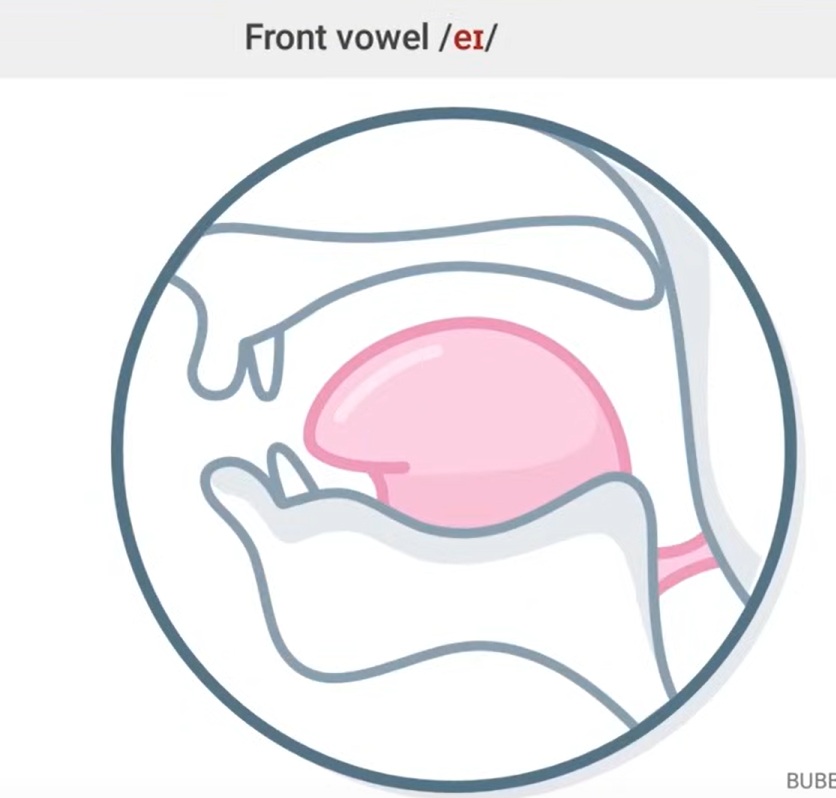
How to pronounce the “i” sound.
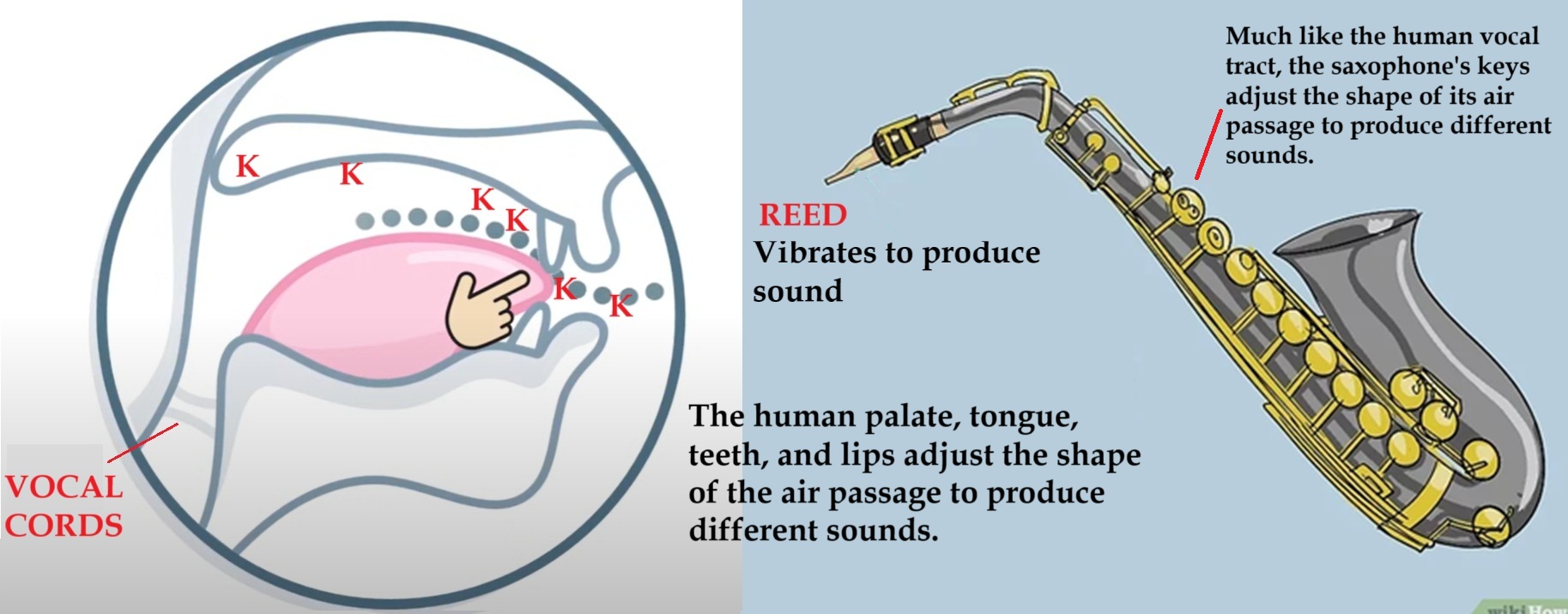
How different sounds are produced
OTHER GRAMMAR TESTS
Click here to access more tests
External video: Machu Picchu 101 -National Geographic
Transcript
Vocabulary