Travel: Kruger National Park. Grammar: Past simple and past simple continuous. Pronunciation: British and US accents.
EXTERNAL VIDEO
Click on image to watch
TEXT
TRANSCRIPT OF THE VIDEO- EDITED
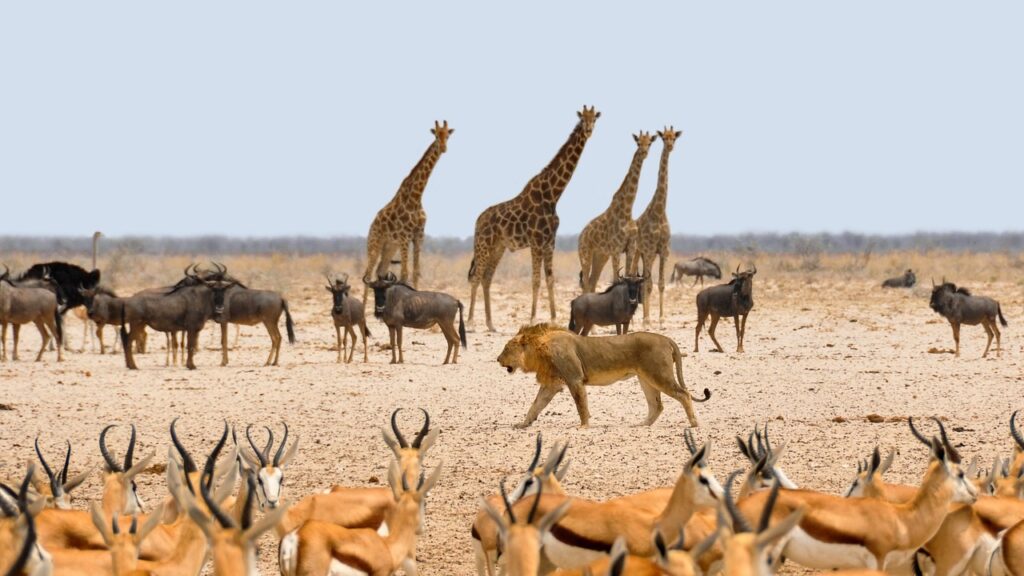
These lions had recently caught a giraffe, and they spent all afternoon feeding on it. I counted eight individual lions here, and it was really special to hear them interacting with one another at their dinner table.
That lion looked like it wasn’t going to do anything, and out of nowhere, a female appeared, and they ran off into the bushes. I needed to head back to Skukuza or I would be late.
After sunset, there was a pair of African black ducks visible in front of the camp’s restaurant. This is not a common species to see in the park. Here’s a look at the route I chose to drive this morning—quite a long one, but I’ve had success on it in the past.
This clan of spotted hyenas was making its way back home after a night out on patrol. When they were done checking me out, I made my way to the low-water bridge over the Sand River, where I enjoyed watching the birdlife.
At the moment, I’m parked on the big bridge on the H12 that goes over the Si River, and there are some hippos in the water next to me.
Last night, I set up a motion camera next to my tent to see what comes past the campsite. A honey badger came and inspected the camera, and there were also genets that passed by; they weren’t too curious.
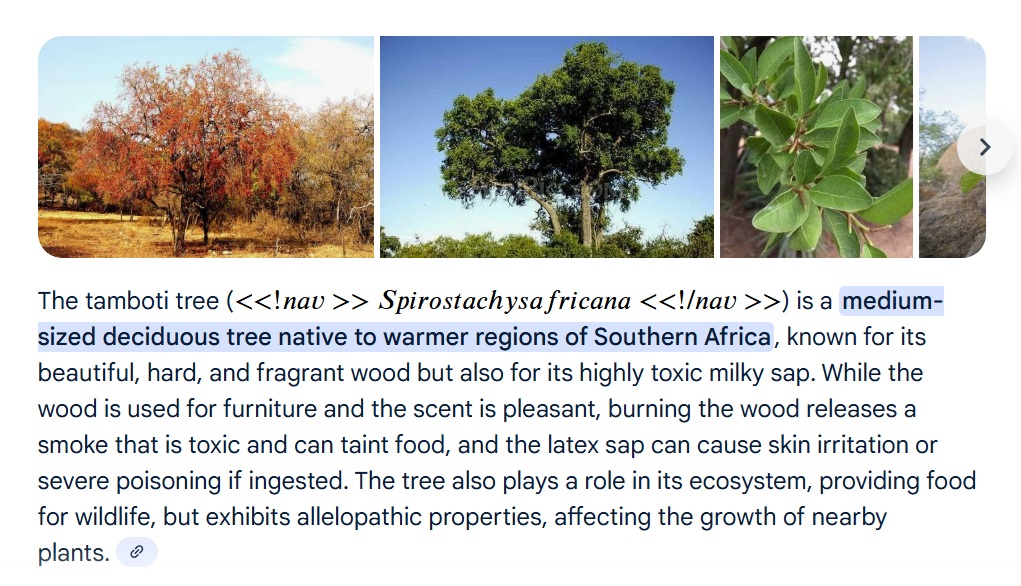
With temperatures moving into the 30s, I was lucky to get a distant but open visual of this male leopard before he made his way into the shade of a tamboti tree.
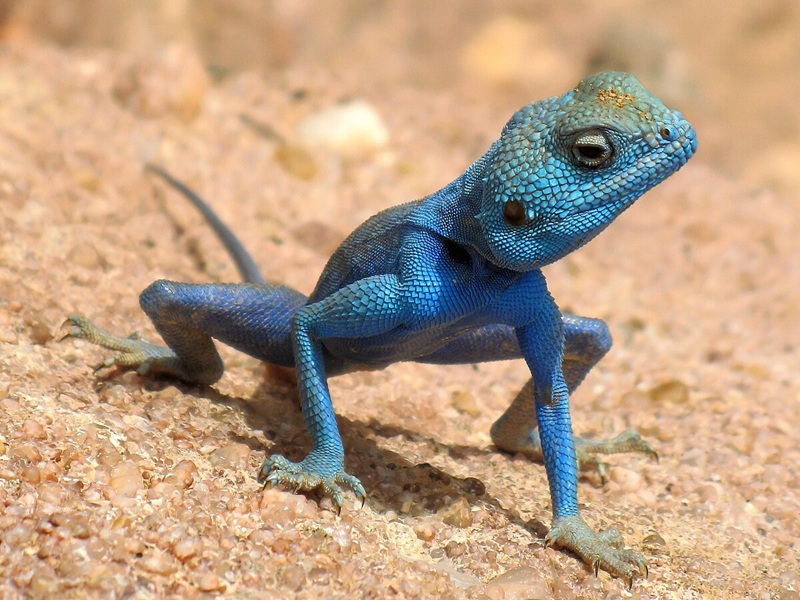
While I’ve been in the campsite waiting for things to cool down, a flock of 7 or 8 violet-backed starlings came past, and they were in a tree where the blue-headed agama lizard was yesterday when I arrived. And the starlings were feeding on these yellow and green worms or caterpillars that were in the tree—and there were also a few that I saw on the tent.
And it’s just gone 3:50 now; I’m going to go for a drive soon when things cool down a little bit.
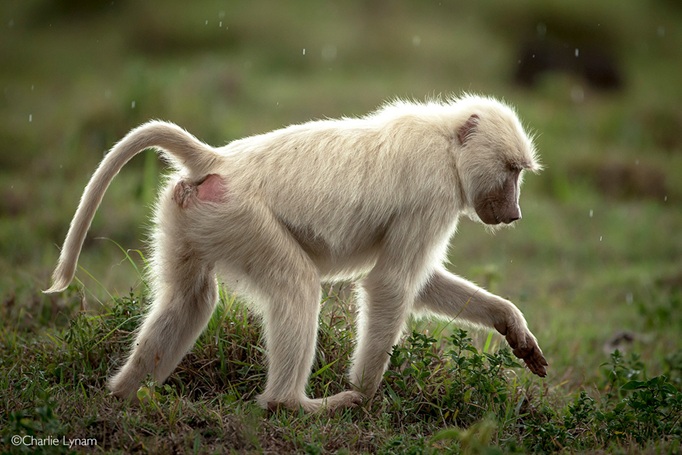
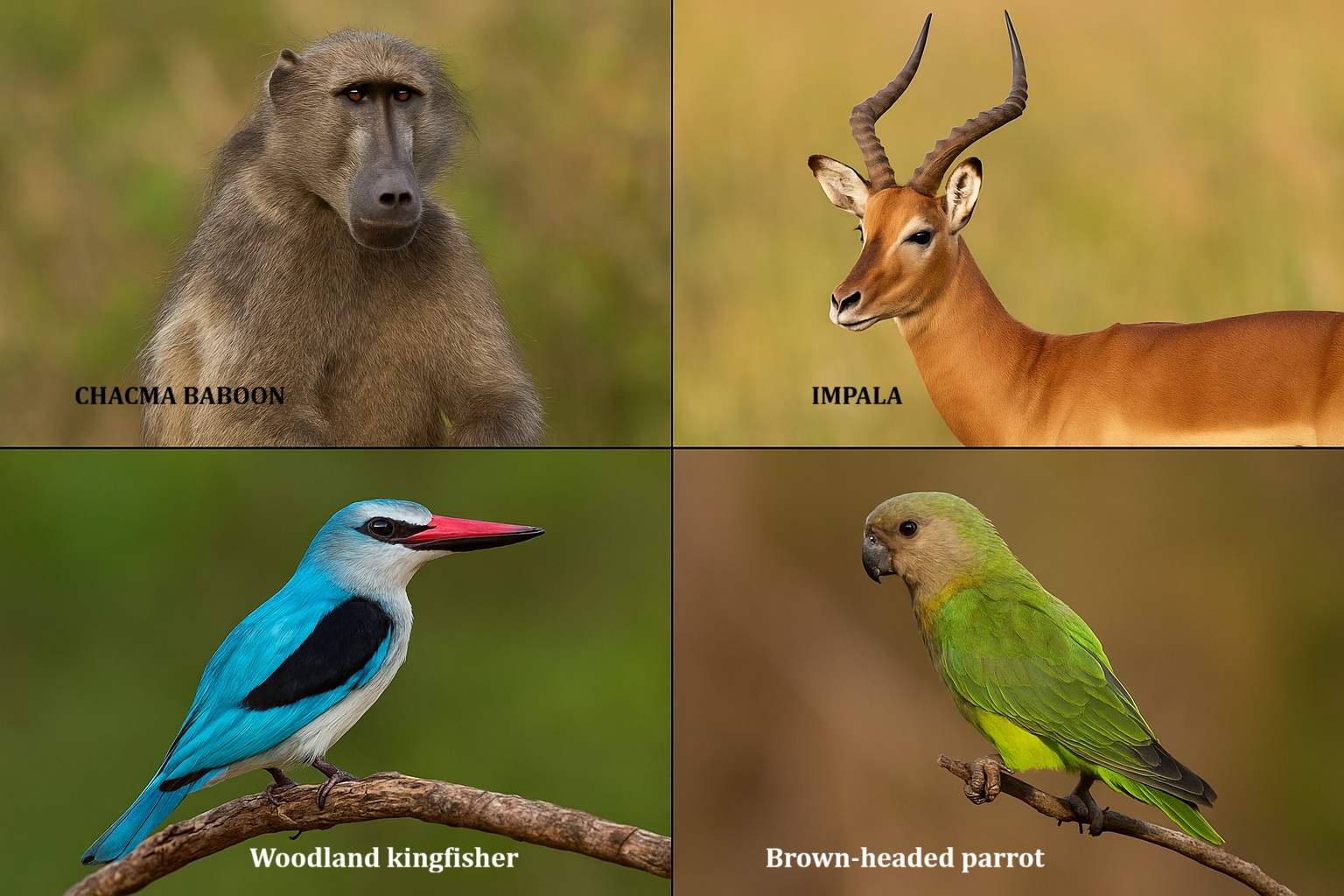
I spent most of the afternoon in the campsite at Skukuza hiding from the midday heat. Temperatures in November can get quite high, and there’s really no point driving around sometimes during the heat of the day. The mammals, they retreat into the shade and only get active again when the temperatures cool down. But now it’s just gone half past 4:00, and I’m doing a similar drive compared to the one I did this morning, down towards the S21 and then I will make a U-turn and head back toward Skukuza. I haven’t seen much besides a big troop of chacma baboons.
There are so many baby impalas around this time of year—late November, after the first summer rains. It’s quite common to see hundreds of them running around. This is something you only see during the summer season; impalas don’t give birth any other time of year.
Nothing resembles the Kruger during this time of year more than the call of the woodland kingfisher and the sight of all these baby impalas. And of course, everything is green and full of life.
Later that evening, the honey badger made another brief appearance in the campsite.
Good morning, guys. Welcome to my third day in the park.
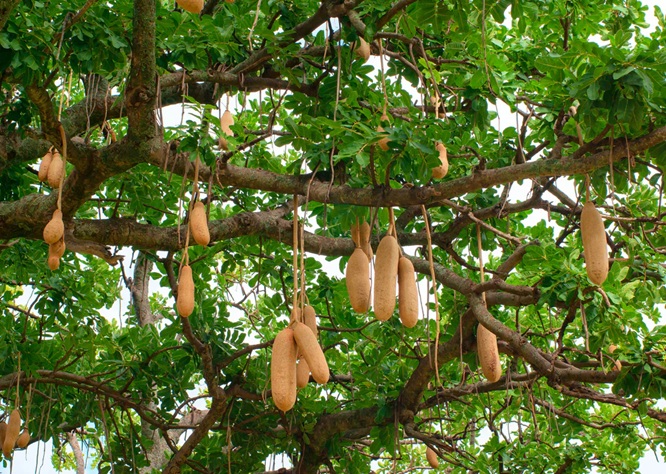
Earlier this morning, I saw a baboon feeding on the fruit of the sausage tree. I haven’t seen that before—the only animal I’ve ever seen eating it is the brown-headed parrot. It looks like a tough fruit to get into.
When I got back to the campsite, I found a juvenile southern tree agama under my camp chair. I was a little worried, but after placing it on a tree, I saw it was fine.
There were two leopards feeding on an impala—not the most open view, but close to the road and very active. Definitely the best leopard sighting of the trip so far—a great way to end another day in Kruger.
Morning again! It’s my fourth day in the park.
I thought a male lion was about to vanish into the bush, but I guessed where he was going—toward a small body of water—so I drove ahead and waited. Luckily, he arrived, and his two brothers weren’t far behind, lying in the middle of the tar road. When they heard him calling, they stood up and moved toward him.
It really has been a lion-filled morning. First those three big males on the S1, and then two females at the same spot where I saw the leopards yesterday.
I was waiting near a granite boulder when the females walked past. I’ve actually filmed one of those big males before, back in May with my dad, walking along the S65 marking his territory.

NEW WORDS WITH LINKS TO WORDSMYTH VISUAL DICTIONARY
COMMON WORDS
individual – one single person or animal, not a group.“One zebra is an individual, but many zebras together are a herd.”
bush – a short, leafy plant with many small branches.“The rabbit hid under a bush.”
African bush – the wild, natural land in Africa where many animals live. “The African bush has tall grass, trees, and animals like lions, elephants, and giraffes.”
species – a kind of animal or plant that is different from others.
“Elephants and lions are two different species.”
route – the way or path you go to get somewhere.“Dad showed me the route to school on the map.”
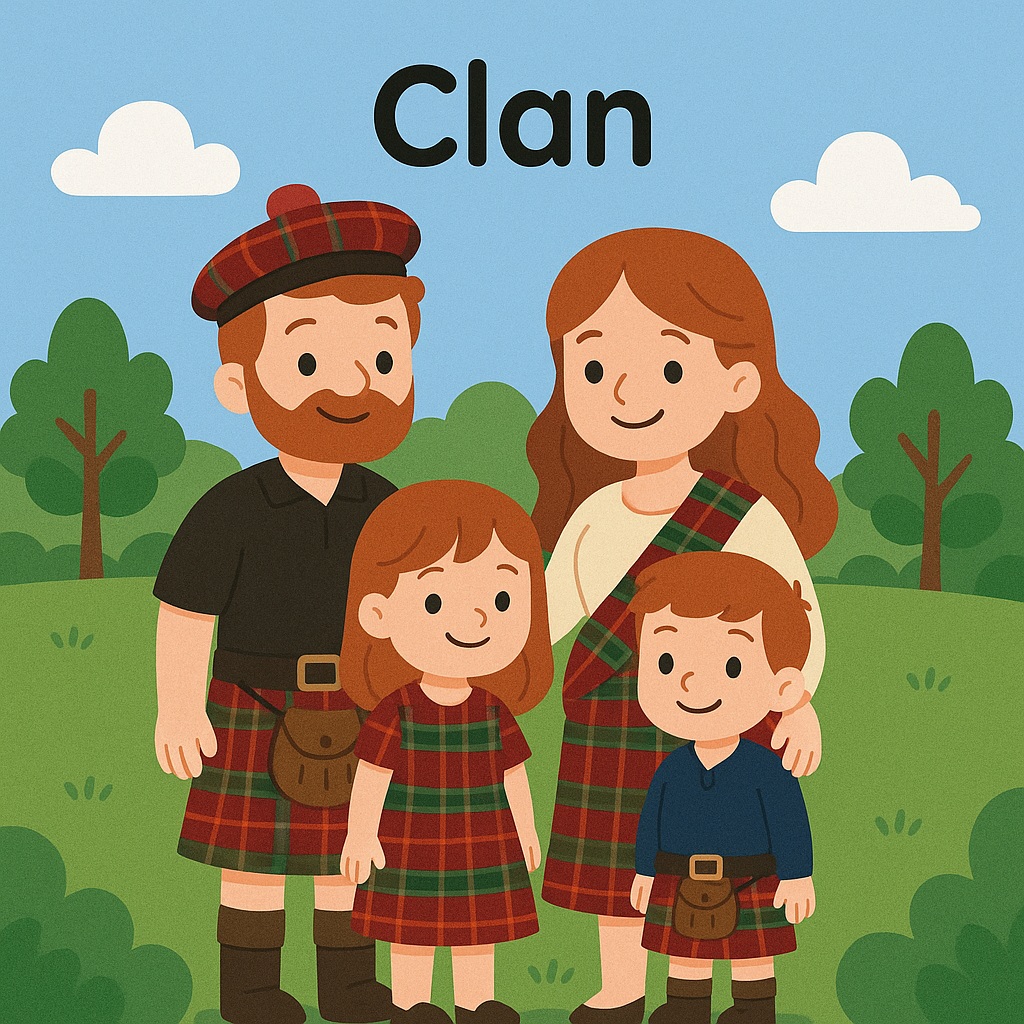
clan – a big family or group that stays together.“All the bears in the forest are part of one bear clan.”
patrol – to walk or drive around to check if everything is safe.“The park ranger goes on patrol to make sure the animals are okay.”
birdlife – all the birds living in one place.
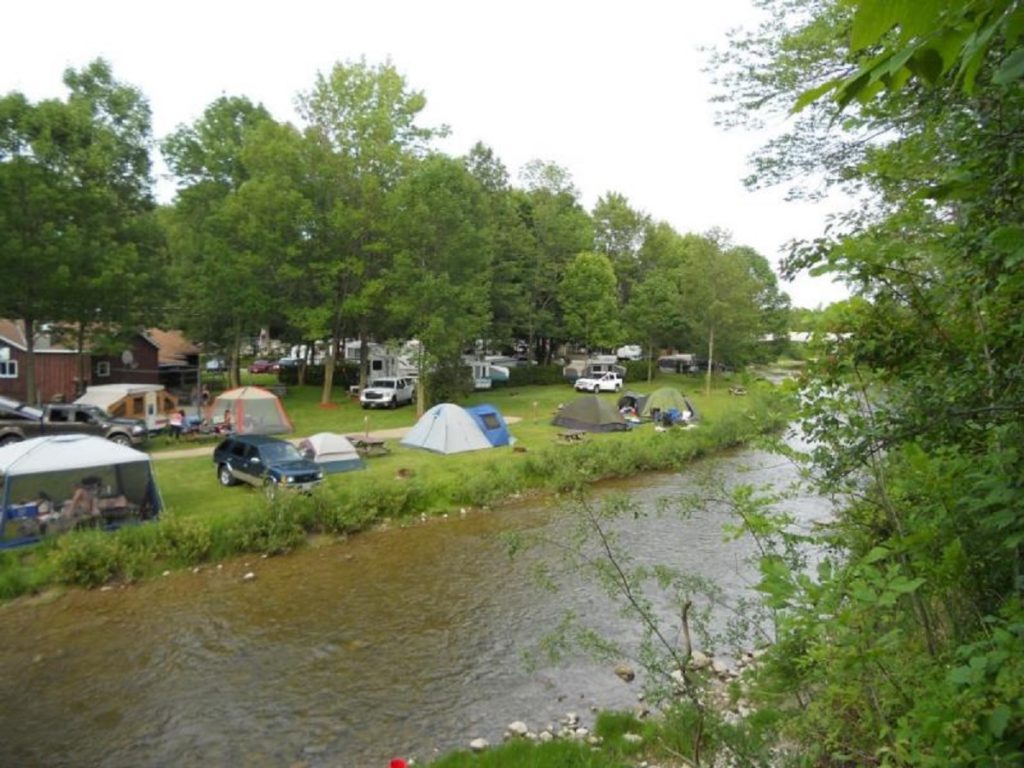
campsite – a place where people put up tents and sleep outside.
flock – a group of birds or sheep.
tent – a cloth house you can fold up and carry when you go camping.
mammal – an animal that has fur and drinks milk from its mother.
🐻“Dogs, whales, and people are mammals.”
juvenile – a young animal or person, not yet grown up.
🐣“That small elephant is a juvenile—it’s still learning!”
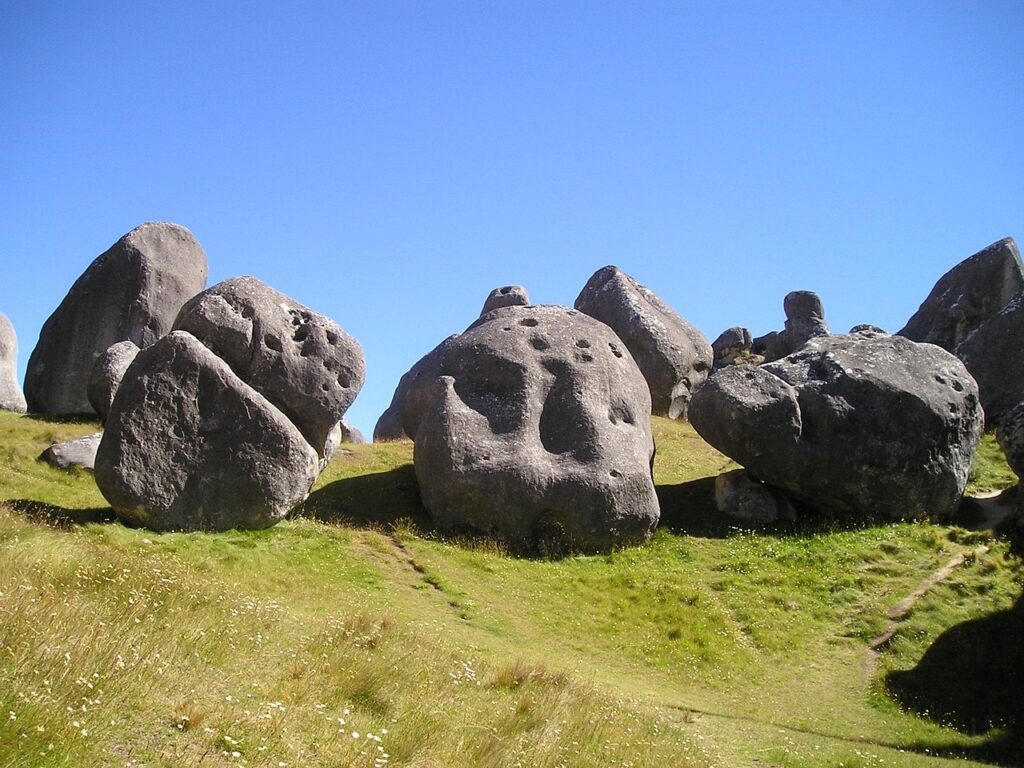
boulder – a very big rock.
territory – an area of land that an animal or group protects as its home.
🐅“The tiger keeps other tigers out of its territory.”
AFRICAN ANIMALS AND TREES
MORE ANIMALS
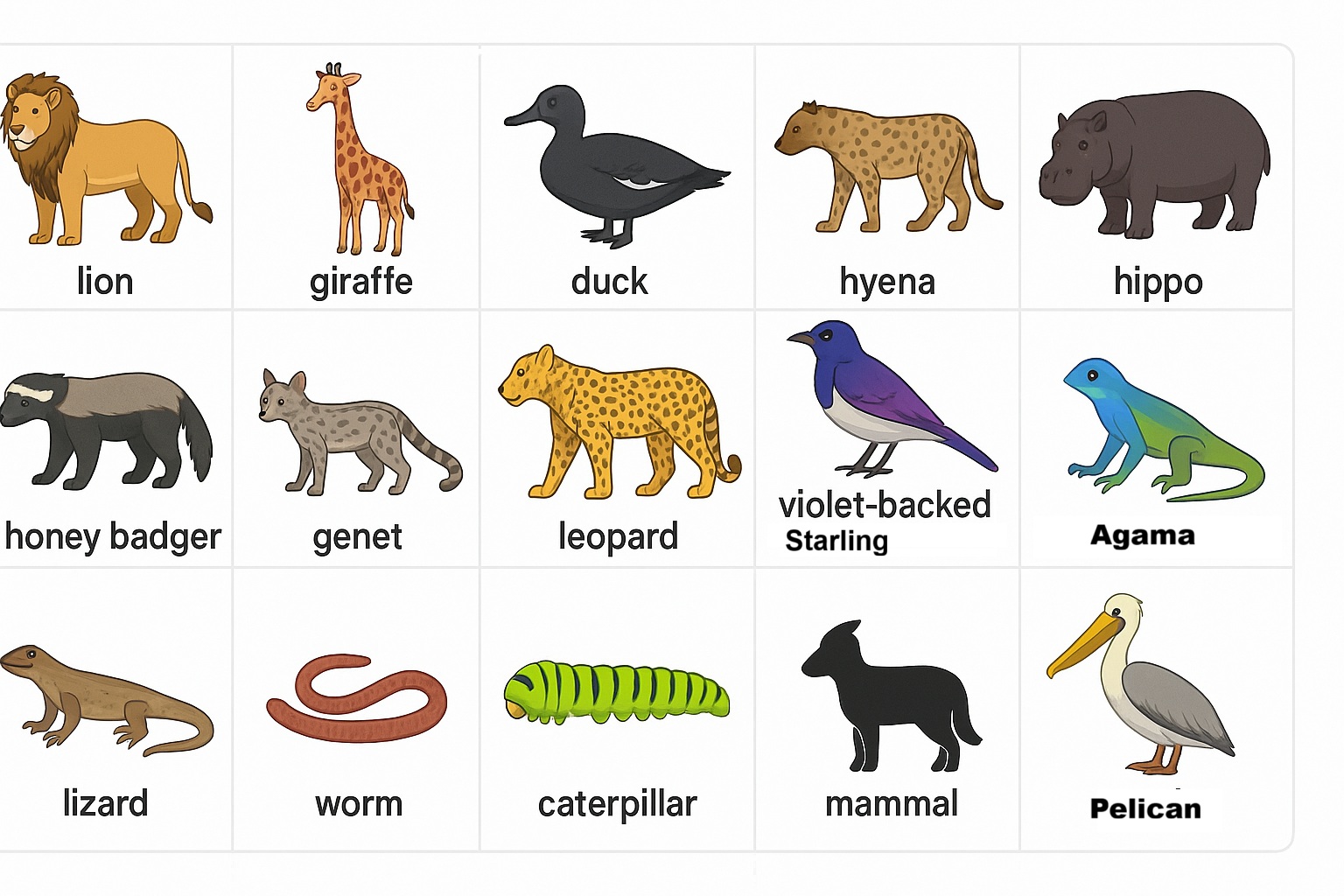
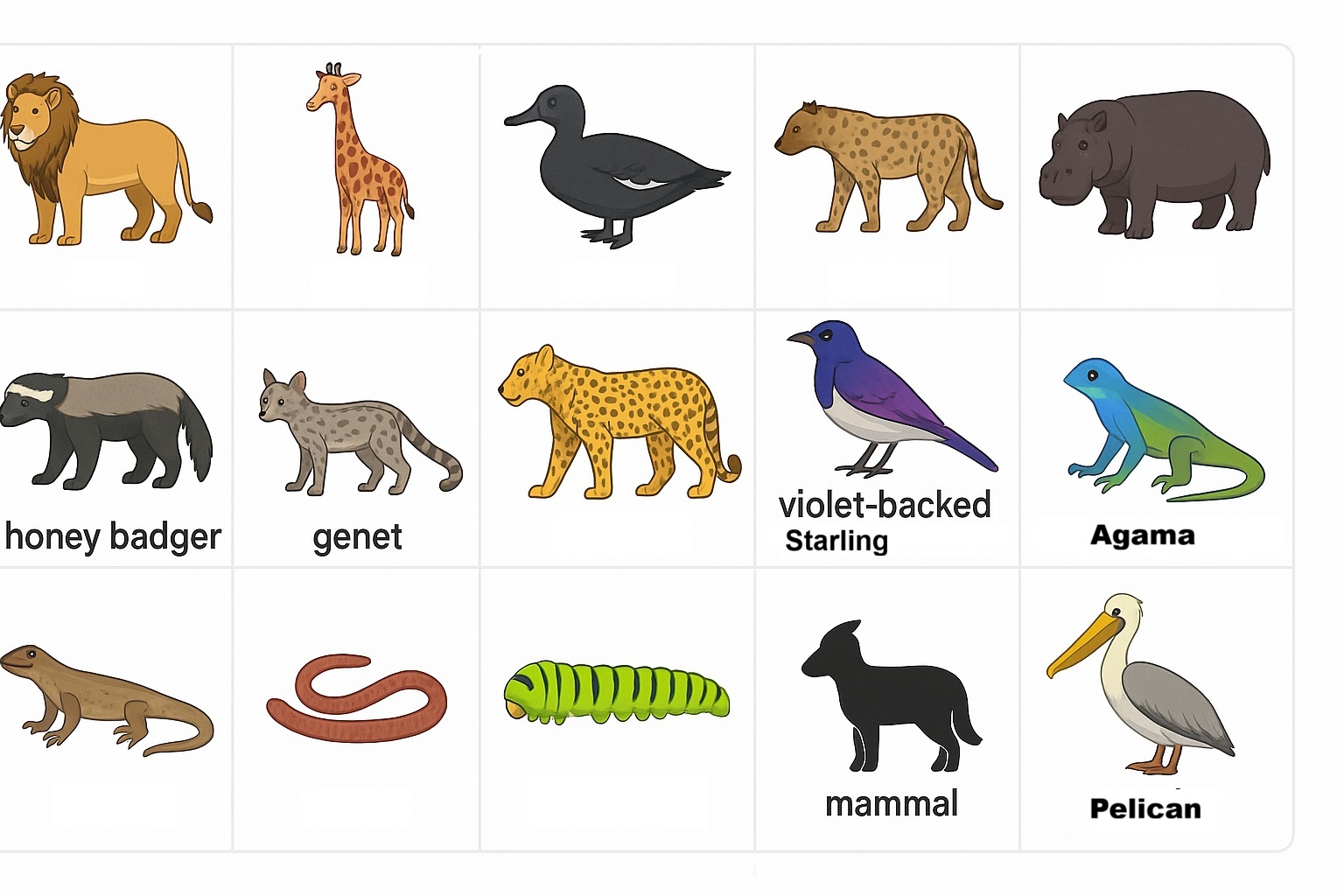
TEST YOUR VOCABLARY – Say the word that goes with the image.
TEST YOUR VOCABLARY – Say the word that goes with the definition
“One zebra is an individual, but many zebras together are a herd.”
“The African bush has tall grass, trees, and animals like lions, elephants, and giraffes.”
- campsite – a place where people put up tents and sleep outside.
- flock – a group of birds or sheep.
- species – a kind of animal or plant that is different from others.
“Elephants and lions are two different species.”
- route – the way or path you go to get somewhere.
- clan – a big family or group that stays together.
“All the bears in the forest are part of one bear clan.”
- patrol – to walk or drive around to check if everything is safe.
“The park ranger goes on patrol to make sure the animals are okay.”
- mammal – an animal that has fur and drinks milk from its mother.
🐻“Dogs, whales, and people are mammals.” - juvenile – a young animal or person, not yet grown up.
🐣“That small elephant is a juvenile—it’s still learning!” - boulder – a very big rock.
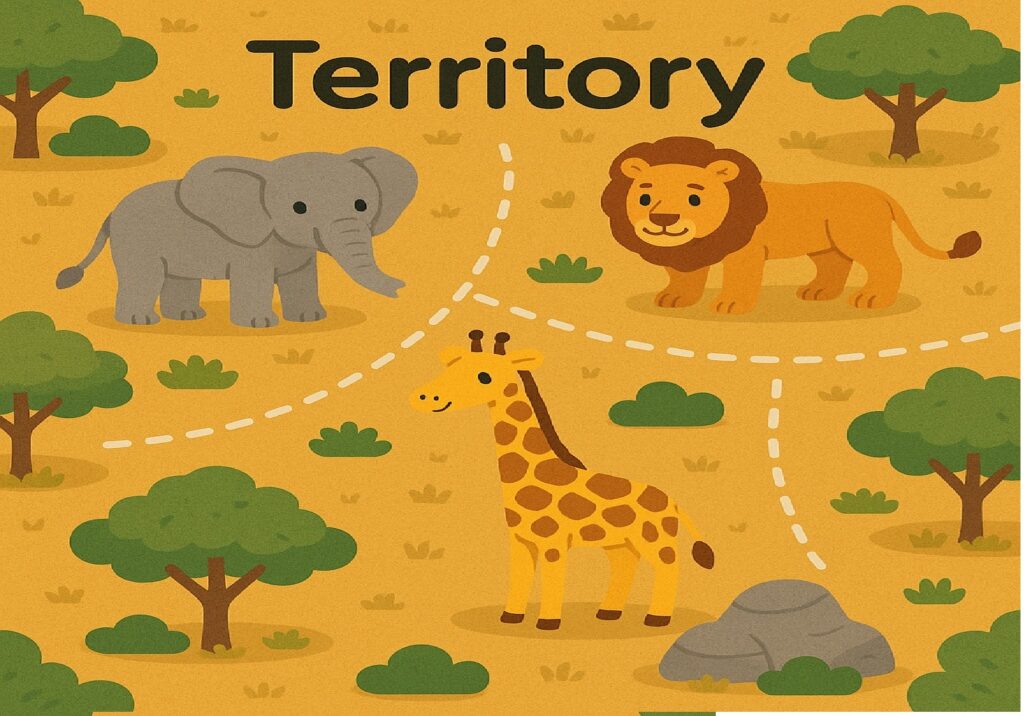
- territory – an area of land that an animal or group protects as its home.
🐅“The tiger keeps other tigers out of its territory.”
TEST YOUR LISTENING SKILLS – ANSWER THE QUESTIONS BELOW
Use desktop mode on mobile devices
Kruger Park Adventure – Comprehension Quiz
1. What animal did the lions catch and eat?
A. A zebra
B. A giraffe
C. A buffalo
D. An impala
2. How many lions were counted at the scene?
A. Six
B. Seven
C. Eight
D. Nine
3. Where did the narrator need to go before it got late?
A. The restaurant
B. The campsite
C. Skukuza
D. The bridge
4. Which unusual birds were seen in front of the restaurant?
A. African black ducks
B. Violet-backed starlings
C. Kingfishers
D. Parrots
5. What does the word clan describe in the story?
A. A group of elephants
B. A group of hyenas
C. A group of lions
D. A group of birds
6. What were the hyenas doing?
A. Hunting
B. Sleeping
C. Going back home after patrol
D. Crossing the river
7. What animals were in the river near the H12 bridge?
A. Crocodiles
B. Hippos
C. Fish
D. Turtles
8. What animal checked the camera near the tent?
A. Leopard
B. Honey badger
C. Baboon
D. Impala
9. What were the violet-backed starlings eating?
A. Seeds
B. Fruits
C. Worms or caterpillars
D. Fish
10. Why did the narrator rest in the campsite during the day?
A. It was raining
B. It was too hot
C. The roads were closed
D. The animals were gone
11. What do mammals do when it gets too hot?
A. Hunt for food
B. Hide in the shade
C. Go to the river
D. Stay in their nests
12. What group of animals was seen in large numbers in November?
A. Baby elephants
B. Baby impalas
C. Baby lions
D. Baby leopards
13. What sound reminds the narrator of Kruger in summer?
A. The roaring of lions
B. The call of the woodland kingfisher
C. The trumpeting of elephants
D. The croaking of frogs
14. What fruit was the baboon eating?
A. Mango
B. Banana
C. Sausage tree fruit
D. Fig
15. What did the juvenile southern tree agama do?
A. Climbed on the tent
B. Hid under the camp chair
C. Jumped into the water
D. Ate a caterpillar
16. What were the two leopards eating?
A. A giraffe
B. A zebra
C. An impala
D. A wildebeest
17. What happened when the male lion reached the water?
A. He went to sleep
B. His brothers came to join him
C. He chased a hyena
D. He scared some birds
18. Where did the narrator wait for the female lions?
A. Near the restaurant
B. Near a granite boulder
C. At the campsite
D. On the tar road
19. What was the male lion doing in May?
A. Hunting
B. Sleeping in the sun
C. Marking his territory
D. Playing with cubs
20. What is the main idea of the story?
A. A family camping trip
B. A photographer’s animal adventures in Kruger Park
C. A lesson about the weather
D. A guide to camping equipment
✅ Answer Key
1-B, 2-C, 3-C, 4-A, 5-B, 6-C, 7-B, 8-B, 9-C, 10-B,
11-B, 12-B, 13-B, 14-C, 15-B, 16-C, 17-B, 18-B, 19-C, 20-B
GRAMMAR REFRESHER
PAST SIMPLE AND PAST CONTINUOUS.
We use the Past Simple to talk about finished actions in the past — things that started and ended before now.
Example: I saw a lion yesterday.
(The action is finished — I saw it and that’s it.)
We use the Past Continuous to talk about an action that was happening at a certain time in the past — something that was in progress.
Example: I was watching a lion when it started to roar.
(The watching was happening — then something else happened.)
We often use Past Continuous and Past Simple in the same sentence:
Example: I was driving (past continuous) when I saw (past simple) a leopard.
🟢 The long action (was driving)
🔵 The short action (saw) happened in the middle.
GRAMMAR TEST
Hover over the blank space (tap & hold then hit the “back” navigation arrow on phones) to reveal the answer
TEST: Fill in the blanks with the correct tenses of the verbs in parentheses
These lions had recently caught (catch) a giraffe, and they spent (spend) all afternoon feeding (feed) on it. I counted (count) eight individual lions here, and it was (be) really special to hear them interacting (interact) with one another at their dinner table.
That lion looked (look) like it wasn’t (be not) going to do anything, and out of nowhere, a female appeared (appear), and they ran (run) off into the bushes. I needed (need) to head back to Skukuza or I would (will) be late.
After sunset, there was (be) a pair of African black ducks visible in front of the camp’s restaurant. This is (be) not a common species to see in the park. Here’s a look at the route I chose (choose) to drive this morning—quite a long one, but I had (have) success on it in the past.
This clan of spotted hyenas was making (make) its way back home after a night out on patrol. When they were (be) done checking me out, I made (make) my way to the low-water bridge over the Sand River, where I enjoyed (enjoy) watching the birdlife.
At the moment, I was parked (park) on the big bridge on the H12 that goes (go) over the Si River, and there were (be) some hippos in the water next to me.
Last night, I set (set) up a motion camera next to my tent to see what came (come) past the campsite. A honey badger came (come) and inspected (inspect) the camera, and there were (be) also genets that passed (pass) by; they weren’t (be not) too curious.
With temperatures moving (move) into the 30s, I was (be) lucky to get a distant but open visual of this male leopard before he made (make) his way into the shade of a tamboti tree.
While I was waiting (wait) in the campsite for things to cool down, a flock of 7 or 8 violet-backed starlings came (come) past, and they were (be) in a tree where the blue-headed agama lizard was (be) yesterday when I arrived (arrive). And the starlings were feeding (feed) on these yellow and green worms or caterpillars that were (be) in the tree—and there were (be) also a few that I saw (see) on the tent.
And it’s just gone 3:50 now; I was going (go) to go for a drive soon when things cooled (cool) down a little bit.
I spent (spend) most of the afternoon in the campsite at Skukuza hiding from the midday heat. Temperatures in November can get (get) quite high, and there’s really no point driving around sometimes during the heat of the day. The mammals, they retreated (retreat) into the shade and only became (become) active again when the temperatures cooled (cool) down. But now it’s just gone half past 4:00, and I was doing (do) a similar drive compared to the one I did (do) this morning, down towards the S21 and then I made (make) a U-turn and headed (head) back toward Skukuza. I hadn’t seen (see) much besides a big troop of chacma baboons.
There were (be) so many baby impalas around this time of year—late November, after the first summer rains. It’s quite common to see hundreds of them running (run) around. This is (be) something you only see during the summer season; impalas don’t (do not) give birth any other time of year.
Nothing resembles (resemble) the Kruger during this time of year more than the call of the woodland kingfisher and the sight of all these baby impalas. And of course, everything is (be) green and full of life.
Later that evening, the honey badger made (make) another brief appearance in the campsite.
Earlier this morning, I saw (see) a baboon feeding (feed) on the fruit of the sausage tree. I hadn’t seen (see) that before—the only animal I’ve ever seen eating (see eat) it is the brown-headed parrot. It looked (look) like a tough fruit to get into.
When I got (get) back to the campsite, I found (find) a juvenile southern tree agama under my camp chair. I was (be) a little worried, but after placing (place) it on a tree, I saw (see) it was (be) fine.
There were (be) two leopards feeding (feed) on an impala—not the most open view, but close to the road and very active. Definitely the best leopard sighting of the trip so far—a great way to end (end) another day in Kruger.
I thought (think) a male lion was (be) about to vanish into the bush, but I guessed (guess) where he was going (go)—toward a small body of water—so I drove (drive) ahead and waited (wait). Luckily, he arrived (arrive), and his two brothers weren’t (be not) far behind, lying (lie) in the middle of the tar road. When they heard (hear) him calling (call), they stood (stand) up and moved (move) toward him.
It really was (be) a lion-filled morning. First those three big males on the S1, and then two females at the same spot where I saw (see) the leopards yesterday.
I was waiting (wait) near a granite boulder when the females walked (walk) past. I’ve actually filmed (film) one of those big males before, back in May with my dad, walking (walk) along the S65 marking (mark) his territory.
PRONUNCIATION TIPS
British and American English Sounds.
1. Different vowel sounds
British English often sounds rounder or longer, while American English sounds flatter or shorter.
🇬🇧 bath → /bɑːθ/ (long “ah”)
🇺🇸 bath → /bæθ/ (short “a,” like in cat)
🇬🇧 hot → /hɒt/
🇺🇸 hot → /hɑːt/
2. The “r” sound
In British English, people often don’t pronounce the “r” at the end of a word (unless another vowel follows).
In American English, people do pronounce the “r.”
🇬🇧 car → sounds like cah
🇺🇸 car → sounds like carr
🇬🇧 teacher → teachuh
🇺🇸 teacher → teacherr
🧁 3. Stress and rhythm
American English often has a stronger rhythm and sometimes changes sounds to make words flow faster.
🇺🇸 “water” → wadder
🇬🇧 “water” → waw-tuh
🇺🇸 “butter” → budder
🇬🇧 “butter” → but-tuh
Some examples of UK and US pronunciation differences. CLICK HERE to watch.
OTHER GRAMMAR TESTS
Click to access more tests Past simple and past continuous